Maine Garden Ideas
  • Home
  • Garden Thyme Blog
  • Themes
    • Butterfly Gardens
    • Moon Gardens
    • Sensory Gardens
    • All About Fairies
  • Flowers
    • Annual Flowers >
      • Alyssum
      • Cosmos
      • Geraniums
      • Marigolds
      • Morning Glories
      • Nasturtiums
      • Petunias >
        • Reviving Petunias
      • Snapdragons
      • Sunflowers
      • Sweet Peas
      • Zinnias
    • Perennial Flowers >
      • Golden Glow (Rudbeckia laciniata ‘Hortensia’)
      • Coneflowers
      • Lupines
      • Purple Coneflower (Echinacea Purpurea)
    • Maine Wildflowers
  • Veggies
    • Warm Season Vegetables >
      • About Beans >
        • Growing Beans
        • Growing Pole Beans
        • How to Make a Teepee Trellis
      • About Corn >
        • Growing Corn
        • What is Baby Corn, anyway?
        • Can you grow corn in containers?
      • Cucumbers >
        • Grow a cucumber in a bottle
        • Growing Pickling Cucumbers
        • Growing cucamelons (Mexican Gherkin)
        • Why do cucumbers blossom but fail to set fruit?
        • Trellising Cucumbers
        • Making Cucumber Relish
        • Powdery Mildew on Cucumbers
      • Melons
      • Peppers >
        • Growing Peppers
      • Squash >
        • Growing Zucchini
        • Spaghetti Squash
      • Tomatoes >
        • How to Harden Off Tomato Plants
        • How (and when) to Prune Tomatoes
        • Magnesium Sulfate (Epsom Salt) for Tomatoes
        • Blossom End Rot in Tomatoes
        • Growing Cherry Tomatoes in Hanging Baskets
        • 4 Best Tomatoes for Short Seasons - Early Tomatoes
        • 5 Early Maturing Tomatoes for Short Season Gardening
        • How to Ripen Green Tomatoes
        • How to Make Sun-Dried Tomatoes at Home
        • How to Grow a Pomato Plant
    • Cool Season Vegetables >
      • Cole Crops
      • Greens >
        • How to Grow Spinach
        • How to Grow Malabar Spinach
        • How to Grow Swiss Chard
        • Harvesting and Cooking Beet Greens
        • How to Grow Microgreens
      • Onions & Garlic >
        • How to Grow Garlic
        • How to Grow Onions
      • Peas >
        • Growing Garden (shelling) Peas
        • Growing Sugar Snap Peas
      • Potatoes >
        • How to Grow Potatoes in Containers
        • How to Grow Potatoes in Hay Bales
      • Root Crops >
        • Growing Beets
        • How to Grow Carrots
        • Turnips vs Rutabagas
  • Herbs
    • Growing Basil
    • Growing Chives
    • Growing Lavender
    • Herbal Tea Garden
    • How to Grow a Culinary Herb Garden
    • How to Grow Herbs in Sponges
    • Colonial Herb Garden - Classroom Project
    • Herbed Butter
    • Making Herbed Oils
  • Gardening Basics
    • Seed starting on a budget
    • Seed Starting Basics
    • Grafting Basics
    • Soil >
      • Starting a New Garden
      • How to Prepare Soil
      • How to Test Soil Drainage
      • What Type of Soil Do You Have
      • Soil Mix Recipe for Containers
      • How to Make Compost Tea
      • How to Use Mulch
  • Garden Pests
    • How to Control Japanese Beetles
    • How to Control Blister Beetles
    • How to Get Rid of Colorado Potato Beetles
  • Birds
    • Hummingbirds >
      • DIY Hummingbird Feeders from Recycled Bottles
      • Annuals for Hummingbird Gardens
      • Perennials for Hummingbird Gardens
    • About Birdseed
    • Choosing a Birdfeeder
  • Fiddleheads and Fairies
  • About Us
  • Contact Us
  • How to Marinate Roasted Vegetables

DIY Soil Science: Analyzing Soil Composition with Mason Jars

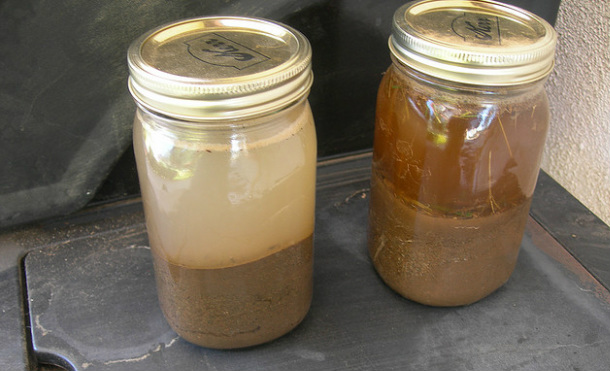
Picture
by London Permaculture / Flickr
​If you're a new gardener, you’ve probably heard a lot of talk about good and bad soil and are wondering if the soil in your garden is good for growing vegetables.  Soil consists of three main components: clay, sand, and silt.

​For optimal gardening results, you will want loamy soil. 
​

What is Loamy Soil?


Perdue University says loamy soil contains approximately equal amounts of clay, sand, and silt. Others quote a ratio of 40% sand, 40% silt, and 20% clay as ideal for most garden vegetables. 
​

How do you know what type of soil you have?


​​It isn’t always easy to determine your soil type by look or feel. This quick and easy Mason jar test will give you a good idea of the composition of your soil. 

​ How to Use Mason Jars for Composition Analysis


  1. Gather a cup or two of soil from your garden area. Remove any large rocks, portions of roots, or any other debris from the soil
  2. Fill a quart mason (or other straight-sided jar) jar approximately halfway with your soil sample.
  3. Pour water into the jar to within an inch or two of the rim. Replace the cover and seal tightly.
  4. Shake the jar vigorously for several minutes to mix the soil and water
  5. Place the jar on a flat surface, such as the table, and allow the sediment to settle for one minute. Sand particles will settle quickly. Mark the level of sand particles on the side of the jar with a permanent marker. Use care not to disturb or move the jar.
  6. Allow the jar to sit undisturbed for another hour. Silt will settle over the top of the sand layer. Mark the height of the silt on the side of the jar.
  7. Leave the jar in the same location for 24 hours and mark the third layer, which is composed of clay.
  8. Measure the height of each layer of soil (sand, silt, and clay) as well as the overall height of the soil in the jar. To determine the percentage of each layer, divide the height of each individual layer by the total height of the soil in the jar.
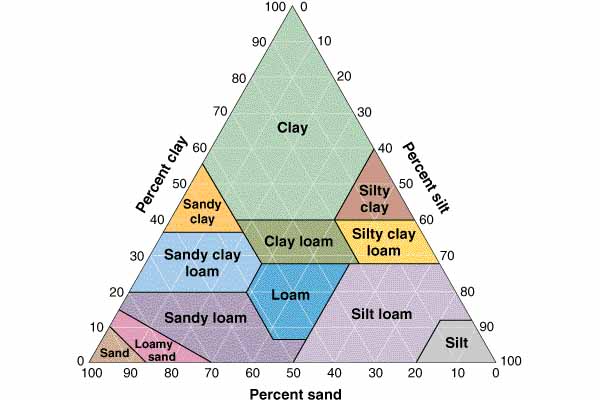
  9. Note the percentage of each soil component on the outside edge of the chart to the right and draw intersecting lines to the center to determine the makeup of your soil.
Ideal Garden Soil
40% Silt
40% Sand
20% Clay
Picture
Mastering the Math: Calculating Percentages with Ease

​Height of Layer ÷ Total Height of Soil
Don't worry if the sand, silt, and clay percentages in your soil aren't perfectly balanced. Most vegetables will thrive as long as your soil is classified as loam. However, be cautious if your soil falls into the extreme outer edges of the chart.
Copyright © 2014 Nannette Richford


  • Home
  • Garden Thyme Blog
  • Themes
    • Butterfly Gardens
    • Moon Gardens
    • Sensory Gardens
    • All About Fairies
  • Flowers
    • Annual Flowers >
      • Alyssum
      • Cosmos
      • Geraniums
      • Marigolds
      • Morning Glories
      • Nasturtiums
      • Petunias >
        • Reviving Petunias
      • Snapdragons
      • Sunflowers
      • Sweet Peas
      • Zinnias
    • Perennial Flowers >
      • Golden Glow (Rudbeckia laciniata ‘Hortensia’)
      • Coneflowers
      • Lupines
      • Purple Coneflower (Echinacea Purpurea)
    • Maine Wildflowers
  • Veggies
    • Warm Season Vegetables >
      • About Beans >
        • Growing Beans
        • Growing Pole Beans
        • How to Make a Teepee Trellis
      • About Corn >
        • Growing Corn
        • What is Baby Corn, anyway?
        • Can you grow corn in containers?
      • Cucumbers >
        • Grow a cucumber in a bottle
        • Growing Pickling Cucumbers
        • Growing cucamelons (Mexican Gherkin)
        • Why do cucumbers blossom but fail to set fruit?
        • Trellising Cucumbers
        • Making Cucumber Relish
        • Powdery Mildew on Cucumbers
      • Melons
      • Peppers >
        • Growing Peppers
      • Squash >
        • Growing Zucchini
        • Spaghetti Squash
      • Tomatoes >
        • How to Harden Off Tomato Plants
        • How (and when) to Prune Tomatoes
        • Magnesium Sulfate (Epsom Salt) for Tomatoes
        • Blossom End Rot in Tomatoes
        • Growing Cherry Tomatoes in Hanging Baskets
        • 4 Best Tomatoes for Short Seasons - Early Tomatoes
        • 5 Early Maturing Tomatoes for Short Season Gardening
        • How to Ripen Green Tomatoes
        • How to Make Sun-Dried Tomatoes at Home
        • How to Grow a Pomato Plant
    • Cool Season Vegetables >
      • Cole Crops
      • Greens >
        • How to Grow Spinach
        • How to Grow Malabar Spinach
        • How to Grow Swiss Chard
        • Harvesting and Cooking Beet Greens
        • How to Grow Microgreens
      • Onions & Garlic >
        • How to Grow Garlic
        • How to Grow Onions
      • Peas >
        • Growing Garden (shelling) Peas
        • Growing Sugar Snap Peas
      • Potatoes >
        • How to Grow Potatoes in Containers
        • How to Grow Potatoes in Hay Bales
      • Root Crops >
        • Growing Beets
        • How to Grow Carrots
        • Turnips vs Rutabagas
  • Herbs
    • Growing Basil
    • Growing Chives
    • Growing Lavender
    • Herbal Tea Garden
    • How to Grow a Culinary Herb Garden
    • How to Grow Herbs in Sponges
    • Colonial Herb Garden - Classroom Project
    • Herbed Butter
    • Making Herbed Oils
  • Gardening Basics
    • Seed starting on a budget
    • Seed Starting Basics
    • Grafting Basics
    • Soil >
      • Starting a New Garden
      • How to Prepare Soil
      • How to Test Soil Drainage
      • What Type of Soil Do You Have
      • Soil Mix Recipe for Containers
      • How to Make Compost Tea
      • How to Use Mulch
  • Garden Pests
    • How to Control Japanese Beetles
    • How to Control Blister Beetles
    • How to Get Rid of Colorado Potato Beetles
  • Birds
    • Hummingbirds >
      • DIY Hummingbird Feeders from Recycled Bottles
      • Annuals for Hummingbird Gardens
      • Perennials for Hummingbird Gardens
    • About Birdseed
    • Choosing a Birdfeeder
  • Fiddleheads and Fairies
  • About Us
  • Contact Us
  • How to Marinate Roasted Vegetables